 English
 Spanish
 Turkish
Elastic Adhesive Bandage: A Professional Overview of Clinical Utility, Application Scenarios, and Premium Manufacturing Excellence
Elastic Adhesive Bandage: A Professional Overview of Clinical Utility, Application Scenarios, and Premium Manufacturing Excellence
Defining the Clinical Role of Elastic Adhesive Bandage in Modern Wound Care
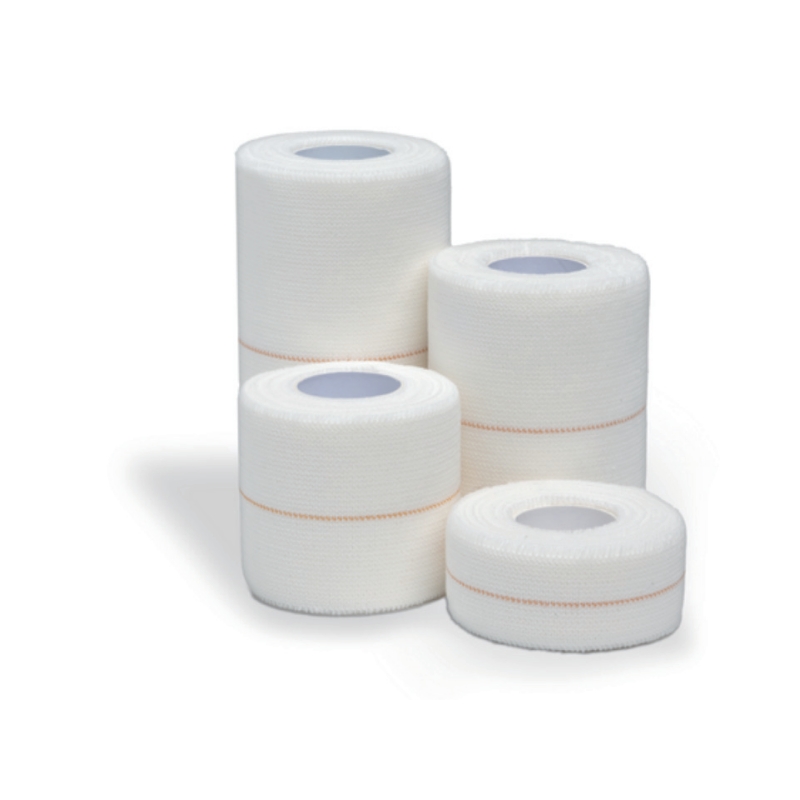
The Elastic adhesive bandage represents a fundamental category within professional medical consumables, serving as a critical tool for clinicians, sports medicine practitioners, and home care providers alike. Engineered to combine the properties of compression, adhesion, and conformability, this versatile product is primarily indicated for the management of sprains, strains, soft tissue injuries, and venous conditions requiring controlled compression. Unlike conventional non-adhesive wraps, the Elastic adhesive bandage adheres securely to itself or to the skin without the need for additional fixation, thereby ensuring uninterrupted therapeutic pressure. Its design facilitates consistent support to injured joints and muscles, reduces edema through graduated compression, and provides mechanical protection for primary dressings. For healthcare professionals seeking reliability and predictable performance, the selection of a high-quality Elastic adhesive bandage directly influences treatment outcomes, patient comfort, and the efficiency of clinical workflows.
Understanding the Composition and Functional Mechanisms of Elastic Adhesive Bandage
To fully appreciate the performance characteristics of a premium Elastic adhesive bandage, one must examine the synergy between its substrate and adhesive system. The fabric base determines tensile strength, breathability, and conformability, while the adhesive formulation governs skin compatibility, residue control, and adhesion durability. A well-constructed Elastic adhesive bandage achieves a balance where the bandage maintains targeted compression without compromising microcirculation or causing skin irritation during prolonged wear. Furthermore, the elastic recovery properties ensure that the bandage returns to its original tension profile after each stretch, providing consistent support across multiple applications. These engineering considerations distinguish a superior Elastic adhesive bandage from generic alternatives, particularly in clinical environments where repeat application, patient sensitivity, and infection control protocols demand uncompromised quality standards.
Critical Scenarios Where Elastic Adhesive Bandage Delivers Optimal Therapeutic Value
The practical applications of Elastic adhesive bandage extend across diverse medical and non-medical settings, each demanding specific performance attributes. In acute sports injury management, the Elastic adhesive bandage is indispensable for providing immediate compression and joint stabilization, often applied as part of the RICE (rest, ice, compression, elevation) protocol to limit swelling and facilitate early mobilization. Orthopedic clinics routinely employ Elastic adhesive bandage to secure post-cast immobilization, support healing fractures, or manage post-operative edema following joint surgeries. In vascular medicine, graduated compression applied through Elastic adhesive bandage assists in managing chronic venous insufficiency, reducing symptoms of heaviness and preventing venous ulcer recurrence. Additionally, in long-term care facilities and home healthcare, the Elastic adhesive bandage serves as a reliable solution for securing wound dressings on challenging anatomical sites such as the heel, elbow, or sacrum, where conventional tapes often fail due to movement or moisture. Even in veterinary practice, the adaptability of Elastic adhesive bandage makes it a preferred choice for managing limb injuries in animals, demonstrating its cross-specialty utility.
Everyday Knowledge and Best Practices for Elastic Adhesive Bandage Application
Despite its widespread use, several common misconceptions exist regarding the optimal application of Elastic adhesive bandage. One fundamental principle is that the bandage should always be applied with uniform tension, starting from the distal aspect of the limb and moving proximally to facilitate venous return. Overlap between successive layers should typically be fifty percent to ensure even pressure distribution without creating tourniquet effects. Another critical consideration is the selection of appropriate width; narrower Elastic adhesive bandage products are suited for digits and small joints, while wider variants provide better stability for large muscle groups and the thoracic region. Users must also be aware that the Elastic adhesive bandage should not be left in place continuously beyond clinical necessity without reassessment, as changes in limb circumference due to swelling or atrophy can alter compression levels. Proper storage—away from heat, moisture, and direct sunlight—preserves the adhesive integrity and elastic properties, ensuring the Elastic adhesive bandage performs as intended when clinical need arises.
High Twist, Cotton Elastic Cloth: The Foundation of Superior Performance
At KELLYUNION, the manufacturing excellence of our Elastic adhesive bandage begins with the selection of high twist, cotton elastic cloth as the primary substrate. This specialized textile construction offers distinct advantages over standard elastic materials: the high twist yarns impart exceptional tensile strength and dimensional stability, preventing fraying or edge curling during application and wear. The cotton component ensures natural breathability and softness against the skin, minimizing the risk of irritation even during extended wear periods. Moreover, the elastic integration within the cloth provides controlled extensibility, allowing the Elastic adhesive bandage to deliver precise compression levels that align with therapeutic requirements. This fabric architecture ensures that our Elastic adhesive bandage maintains its structural integrity under tension, conforms readily to body contours without bunching, and provides consistent support throughout the duration of use—attributes that clinicians have come to rely upon for predictable outcomes.
Advanced Adhesive Engineering: Zinc Oxide and Hot Melt Latex-Free Formulation
The adhesive system employed in KELLYUNION’s Elastic adhesive bandage represents a significant advancement in medical adhesive technology. Our formulation combines the proven benefits of zinc oxide—renowned for its mild astringent and skin-protective properties—with a hot melt, latex-free adhesive mixture that eliminates allergen concerns associated with natural rubber latex. This strategic combination ensures that our Elastic adhesive bandage achieves secure anchorage without provoking contact dermatitis or sensitization reactions, which is particularly critical for patients with compromised skin integrity or known latex allergies. The hot melt application process further guarantees uniform adhesive coating without solvent residues, contributing to the bandage’s clean removal profile. When clinicians select our Elastic adhesive bandage, they gain the confidence that the adhesive will perform reliably across diverse patient populations, maintaining secure fixation even in moist or high-friction environments while leaving minimal adhesive residue upon removal.
Versatile Sizing Options and Air-Permeable Architecture for Enhanced Skin Health
Recognizing that clinical applications vary widely, KELLYUNION manufactures our Elastic adhesive bandage in multiple width configurations, including the industry-standard 2-inch, 3-inch, and 4-inch sizes, with custom lengths available to accommodate specific institutional protocols or specialized procedures. This dimensional flexibility ensures that practitioners can select the precise Elastic adhesive bandage dimensions suited to the anatomical site and compression requirements, thereby optimizing material utilization and reducing waste. More importantly, our Elastic adhesive bandage incorporates an air-permeable adhesive architecture specifically engineered to help prevent skin maceration—a common complication associated with occlusive dressings and tapes. By allowing moisture vapor transmission while maintaining a fluid-resistant barrier, our Elastic adhesive bandage supports the maintenance of healthy peri-wound skin, reduces the risk of moisture-associated skin damage, and enhances overall patient comfort during the treatment course.
High-Quality Extensible Tension for Optimal Compression Therapy Outcomes
Compression therapy represents one of the most evidence-based interventions in wound care and musculoskeletal medicine, and the efficacy of such therapy is directly contingent upon the quality of the Elastic adhesive bandage employed. KELLYUNION’s Elastic adhesive bandage is engineered to deliver high-quality extensible tension that enables graduated compression application with predictable, reproducible results. The elastic recovery characteristics of our bandage ensure that the applied compression remains consistent over time, resisting the gradual loosening that often occurs with inferior products. This reliability is essential for managing conditions such as venous leg ulcers, lymphedema, and post-thrombotic syndrome, where sustained compression levels directly correlate with healing rates. Furthermore, the extensibility of our Elastic adhesive bandage allows for dynamic accommodation of limb movement and fluctuating edema, maintaining therapeutic pressure without restricting mobility—a balance that distinguishes premium compression products from basic elastic wraps.
KELLYUNION: A Trusted Global Partner in Medical Device Supply
With a rich heritage as a specialized medical device manufacturer and exporter, KELLYUNION has established itself as a comprehensive global supplier serving healthcare systems across more than fifty countries spanning Europe, North America, South America, Asia, and the Middle East. Our extensive product portfolio encompasses Class I, II, and III medical devices, reflecting our technical capability and regulatory commitment across the full spectrum of clinical needs. Every Elastic adhesive bandage bearing the KELLYUNION name is manufactured under rigorous quality management systems, supported by internationally recognized certifications including CE marking, ISO standards, and FDA registrations. This unwavering commitment to quality assurance ensures that our Elastic adhesive bandage meets the highest benchmarks for safety, efficacy, and consistency, regardless of the destination market. For procurement professionals, clinicians, and distribution partners seeking a reliable source of premium medical products, KELLYUNION represents a partnership founded on technical expertise, supply chain reliability, and a customer-centric approach to service excellence. We invite you to explore our complete product range and discover why healthcare providers worldwide continue to trust our Elastic adhesive bandage and broader portfolio to meet their most demanding clinical requirements. Visit us at www.kellyunion.com to learn more.